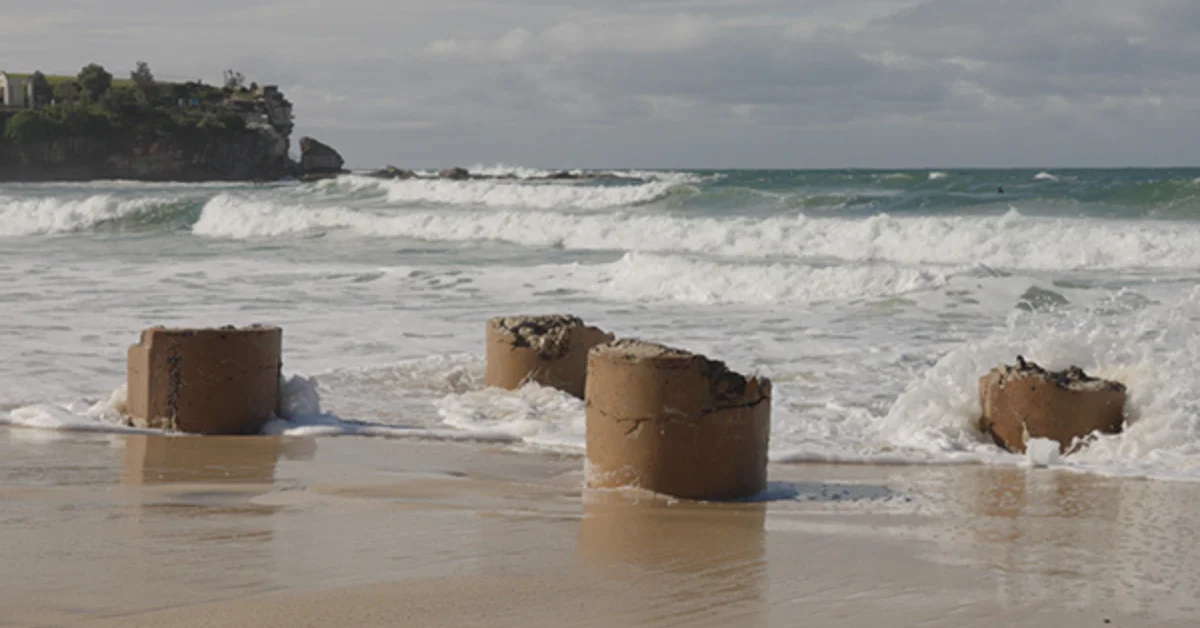
Long before modern surveillance methods were used along Sydney’s coastline, Coogee Beach had lifeguards manning towers to watch for sharks. Some of the concrete foundations from that early safety system were exposed when rough weather shifted the sand in 2022.
Read: Coogee Shark Survivor Leah Stewart Shares Her Story Of Recovery
Local historian Ashley Kingston traced a set of cylindrical concrete supports exposed at Coogee Beach to shark towers and the structure supporting a shark net during a period of intense concern about shark attacks in the 1920s.
The discovery gives a physical connection to a lesser-known chapter of Coogee’s history, when an elevated lookout, warning bell, and shark net formed part of the measures used to protect swimmers.
A lookout above the beach
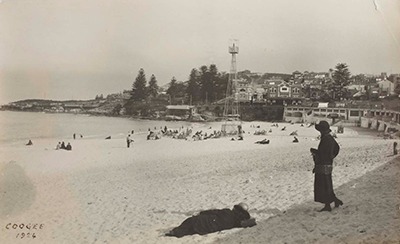


The first shark observation tower was built in 1922. It was a galvanised steel structure mounted on a concrete base supported by concrete piles, with a lifeguard able to watch the water from above.
An electric bell was used to warn swimmers when a shark was spotted. The response came after a series of attacks, including two fatal encounters at Coogee in 1922. A shark-proof fence was also attempted and a rescue boat was obtained as authorities looked for ways to respond to the attacks.
The clues beneath the sand
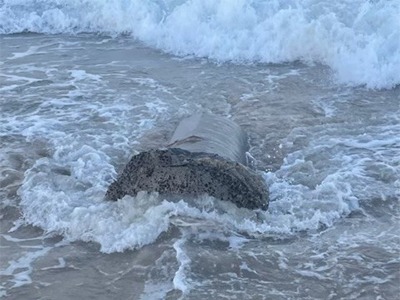
For decades, however, the concrete remains had a different story attached to them. When rough surf exposed about a dozen pylons in July 2022, they were believed to be remnants of the former Coogee pier. Randwick City Council removed the structures because they were moving in the sand and posed a potential hazard to beach users. They were subsequently placed in storage.
Kingston’s research changed that interpretation. While investigating the pier’s construction, he found that its supports were made from cast-iron screw piles rather than concrete. He then turned to historical photographs and identified cylindrical columns matching the structures uncovered on the beach.
The photographs showed the bases of the shark tower and the structure supporting a shark net. Kingston identified the surviving cylinders as remnants of those installations, with the upper sections either eroded or removed over time. A later heritage assessment confirmed the discovery.
A different piece of Coogee’s past
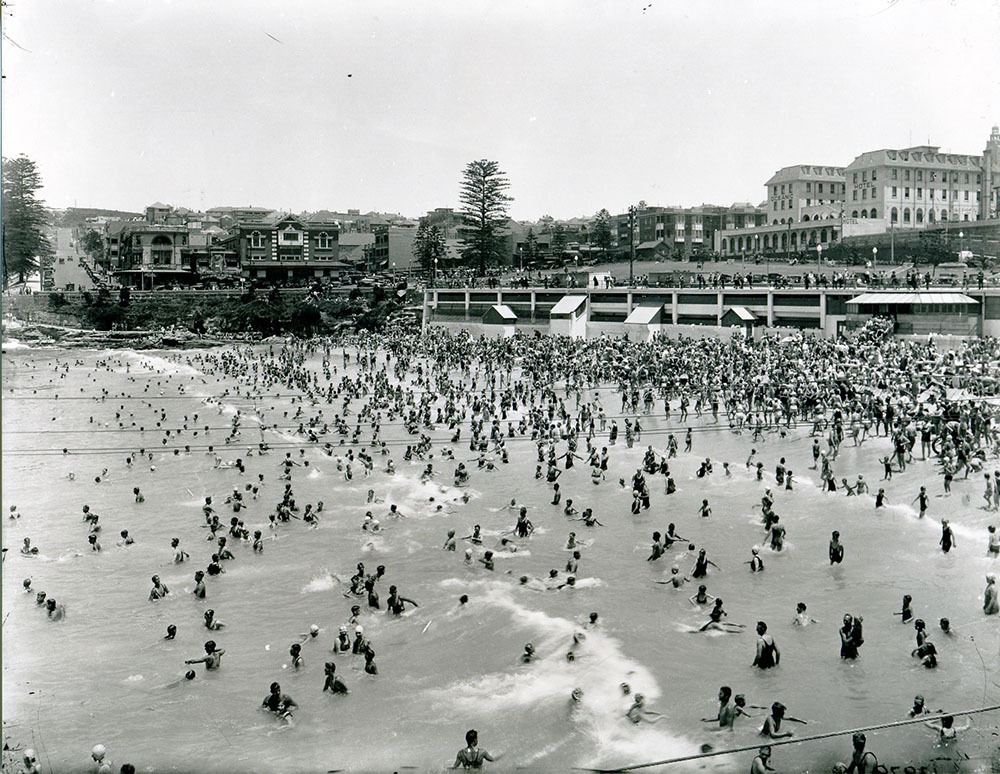
The shark net itself lasted longer than the pier. The pier, built in the 1920s, was dismantled by 1934 after financial difficulties, while the net remained until it collapsed in 1945. Another shark tower was erected in the 1940s but was eventually removed.
The towers did not prevent every shark incident. In 1925, a teenage lifesaver was attacked by a shark in front of the tower while the warning bell was sounding.
Read: Coogee’s Shark Attacks of the Early 1900s Remembered After Sydney Harbour Incident
Today, the concrete cylinders are no longer buried beneath the beach. They are sitting in storage, carrying an unexpected piece of Coogee’s past with them.
What appeared to be fragments of an old pier have instead helped reveal how Coogee responded to fears of shark attacks, with towers and nets becoming part of the beach’s early efforts to protect swimmers.
Published 5-September-2026