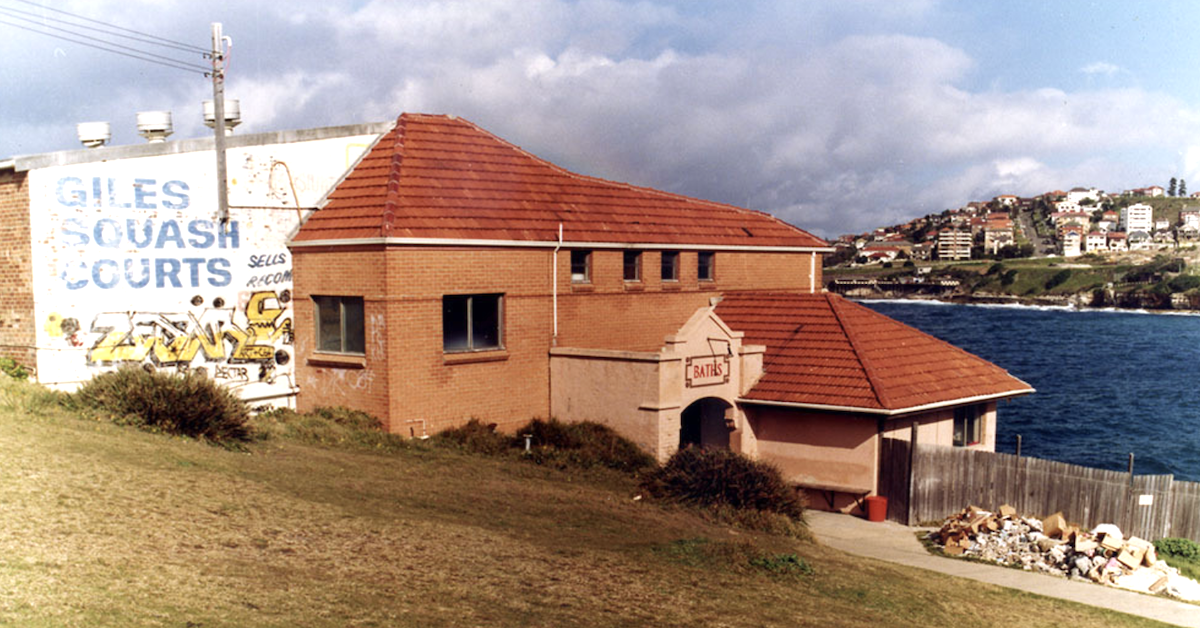
Walk past the old “BATHS” arch on Coogee’s northern headland today, and little remains to reveal the scale of the complex that once stood behind it. The surviving portico now forms part of Dunningham Reserve, serving as a gateway to what was once Giles Gym and Baths—a cliff-top institution perched above the Bogey Hole that drew athletes, ocean swimmers, and generations of residents.
A sanctuary for sport and health
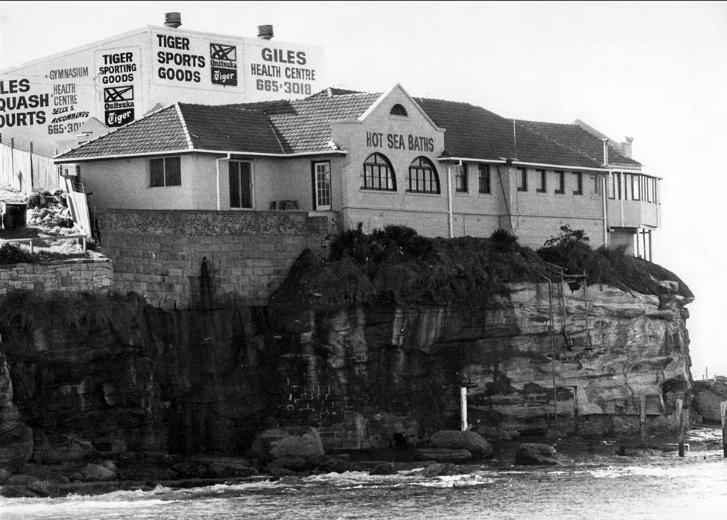
Oscar Elias Giles took over the site in 1924, constructing a substantial facility over the following four years.
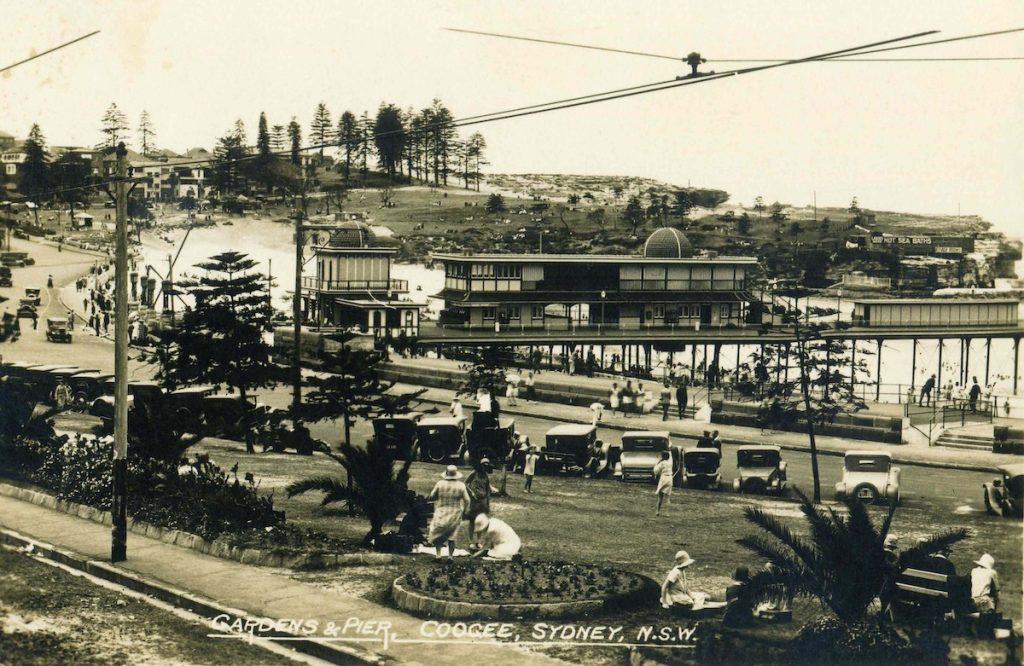
Part ocean baths, part health retreat, and part training venue, Giles quickly cultivated a distinct reputation within Sydney’s sporting culture. Jockeys, boxers, and footballers became regulars, drawn by facilities that extended well beyond basic seaside bathing.
The complex broadened its appeal in 1957 with the addition of squash courts costing £4,000. These courts ensured a steady stream of visitors beyond those utilising the beach and ocean pool.


Among the prominent figures linked to the venue was Walter “Sam” Inglis, a long-time patron who taught local youths swimming and boxing. Following Inglis’s death in 1940, community members raised funds for a memorial sundial. The piece survived the eventual clearing of the site and remains on the headland today.
Privacy behind the paling fence
An unusual feature of the property was a private sunbathing enclosure screened by an eight-foot fence. Published accounts from the 1950s described the area as a refuge where high-profile figures from horseracing, cricket, and rugby could escape photographers and autograph seekers.
Patrons sunbathed nude inside the enclosure, earning the space the local moniker of the “nuditorium”. High walls provided a level of discretion that set the complex apart from the public beach below, adding a unique dimension to its social atmosphere.
Overlapping social history
By the late 1960s, the site occupied another distinct place in Sydney’s social fabric. Historian Garry Wotherspoon noted in testimony to the NSW Special Commission of Inquiry into LGBTIQ hate crimes that the location served as a popular gay beat during 1968 and 1969.
With consensual sexual activity between adult men criminalised in NSW until 1984, the complex formed part of a discreet network where gay men could gather safely. Historical evidence highlights a rare convergence on the headland, where elite athletic training, local recreation, and clandestine meeting grounds coexisted on the same stretch of coastline.
South Sydney steps in
Decades of exposure to salt air and ocean gales took a severe toll on the cliff-top structure. Catastrophic storm damage in 1974 led to the building being condemned.
A rescue effort emerged in 1975 when South Sydney rugby league figures John O’Neill and Gary Stevens, alongside trainer Les Motto, assumed the lease. Local council records indicate the group poured over $47,000 into restoring the venue, drawing heavily on professional league earnings to keep the doors open. Their involvement reinforced the site’s long-standing connection to local rugby culture.
Demolition and memory
Mounting maintenance demands and ongoing structural decay continued to plague the facility. By 1998, municipal planning assessments concluded that the complex was no longer commercially viable. Demolition followed in 2000, though local authorities preserved the original entrance portico.
The surrounding headland later acquired a different layer of community significance. Following the 2002 Bali bombings, the land incorporating the former Giles footprint became part of the Dolphin Point memorial site, honouring six members of the Coogee Dolphins rugby league club who lost their lives.
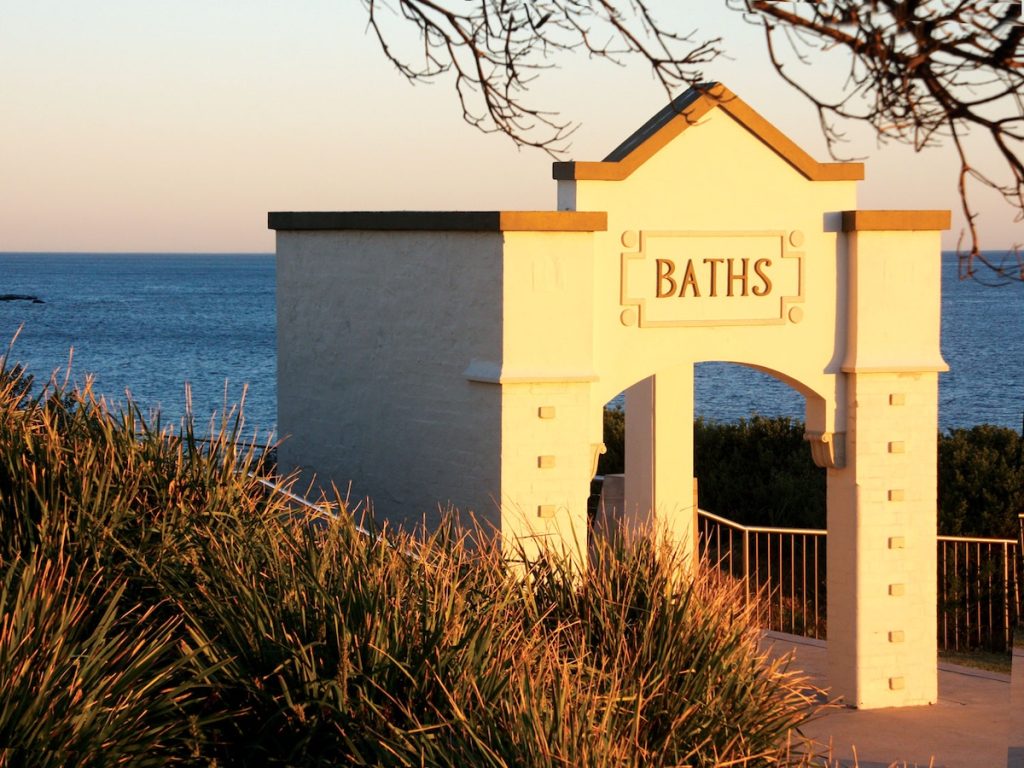
Visitors continuing past the Inglis sundial toward the Bogey Hole still pass beneath the stone entrance. The word “BATHS” remains etched above the doorway, marking an entrance that no longer leads anywhere, yet anchors the memory of a unique coastal institution.
Published 9-Sept-2026